
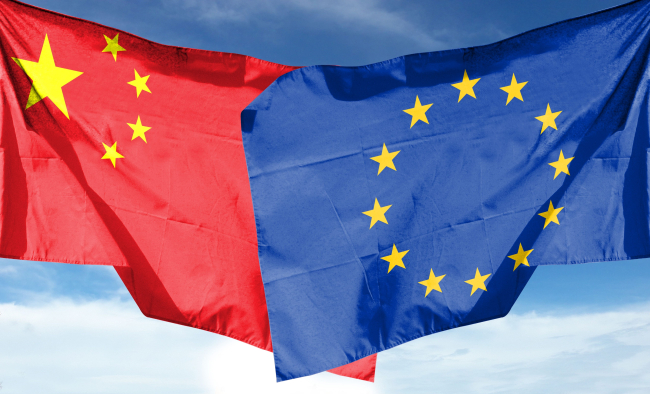
China-EU ties reach half century: 4 things to know
Will Trump 2.0 push the two combative sides to find common ground?
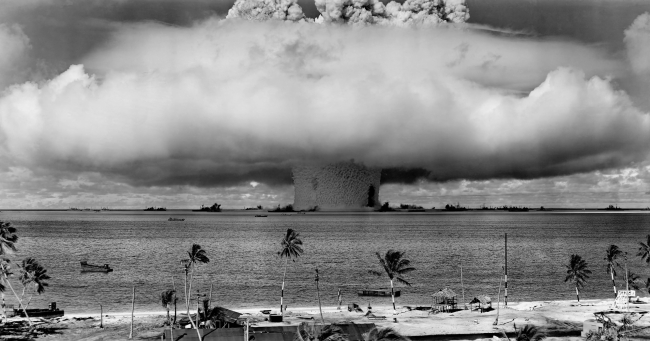
A Fragile Consensus? The Pressure on the Norm Against Nuclear Testing
Apart from North Korea, no state has conducted explosive nuclear tests in the 21st century, reflecting the emergence of a strong international norm against such testing.
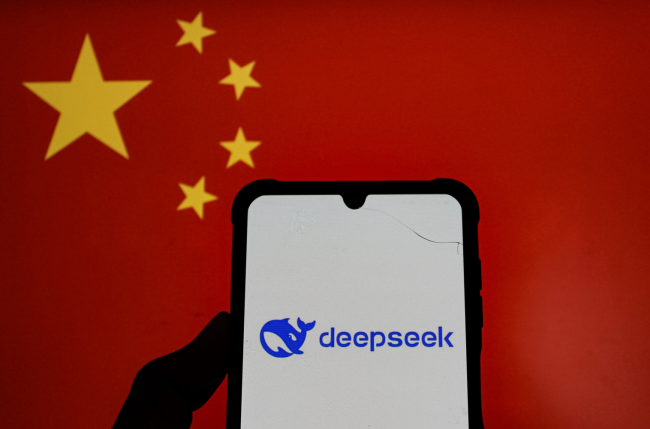
A "DeepSeek Moment"?
DeepSeek, hailed as a champion of Chinese AI, represents less a revolution than a significant optimization of existing technologies. Doubts remain regarding the figures put forward by the start-up, inviting a more measured response to the media hype surrounding China’s technological catch-up. Nonetheless, DeepSeek signals the need to question an economic model based solely on the race for computational power. By betting on open innovation, Europe can carve out its own path in a competition that is far from being a zero-sum game.
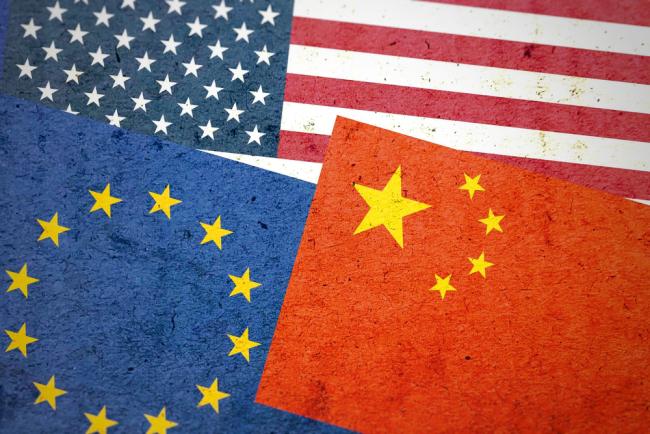
Trump-battered Europe eyes China with launch of diplomatic flurry to Beijing
EU officials and European national representatives are on overlapping visits but each will be asking for something slightly different

The China-led AIIB, a geopolitical tool?
The establishment of the Asian Infrastructure Investment Bank (AIIB) in 2016, on a Chinese initiative, constituted an attempt to bridge the gap in infrastructure financing in Asia. However, it was also perceived in the West as a potential vehicle for China’s geostrategic agendas, fueling the suspicion that the institution might compete rather than align with existing multilateral development banks (MDBs) and impose its own standards.

Will Europe Distance Itself From Taiwan?
To counter U.S. President Donald Trump’s hostility toward Europe, one idea being considered in Brussels is to lean into China’s latest charm offensive.
(Replay) US-China-Taiwan Relations: What to expect in the Trump II Era?
Replay of Ifri's Center for Asian Studies' conference "US-China-Taiwan Relations: What to expect in the Trump II era?", held at Ifri on Tuesday 11 March 2025.

Europe Tempted by Closer Relations With China Following Trump’s Hostility, but Barriers to Cooperation Persist
While U.S. Vice President JD Vance left Europe reeling at the Munich Security Conference last month, Chinese Foreign Minister Wang Yi (王毅) met with several European officials on the sidelines. At the U.N. Security Council a few days later, China pushed for greater European involvement in peace negotiations in the Russia-Ukraine war.
The China-Russia Partnership and the Ukraine War: Aligned but not allied
China and Russia maintain a strategic partnership rooted in shared opposition to the U.S. and liberal democracies, but their relationship is shaped more by pragmatism than trust.
Technical Standards, Soft Connectivity and China’s Belt and Road: Towards greater convergence or fragmentation?
As the intensification of geopolitical competition points toward increased global fragmentation, the definition of technical standards for future markets and industries will play an important role in determining just how deep the fissures will run.
India’s Quest for Economic Emancipation from China
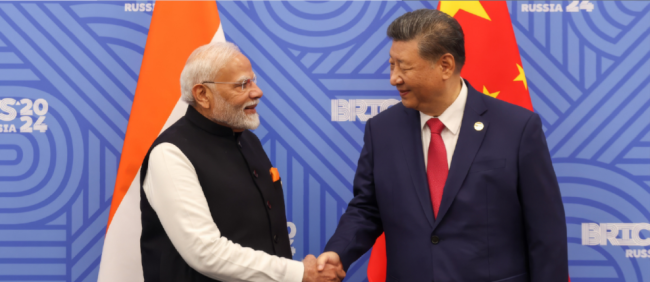
In October 2024, the meeting between Chinese President Xi Jinping and Indian Prime Minister Narendra Modi initiated a thaw in relations between the two Asian powers. Has India's high level of economic dependence on China played an important role in bringing about this diplomatic shift?
The Indo-Pacific and Trump II. In Uncle Sam’s brutal embrace
In this collective analysis, the research team of the Center for Asian Studies presents a synthetic and non-exhaustive assessment of the relations taking shape between the United States under the Trump II administration and some of the main players in the Indo-Pacific.
AI and Technical Standardization in China and the EU: Diverging priorities and the need for common ground
Given the highly disruptive potential of AI, global cooperation on AI safety and governance is imperative, and yet the deeply transformational potential of AI also ensures that a high level of competition and systemic rivalry is likely unavoidable. How can the EU best manage its complex relationship with China in the field of AI so as to ensure a necessary level of cooperation in spite of competition and rivalry?
China’s Quest for a Quantum Leap
The global race to harness quantum science is intensifying. Recognizing the strategic potential of quantum technology for economic, military, and scientific advancement, China is focusing on quantum breakthroughs as a way to shift the balance of power, especially in its competition with the United States. President Xi Jinping has emphasized the importance of scientific innovation, particularly in quantum fields, to fuel national development and ensure security.

Japan: Deciphering Prime Minister Ishiba’s Strategic Vision. Toward an Asian version of NATO?
On Tuesday, October 1, Shigeru Ishiba was sworn in as Prime Minister of Japan. His proposal to revise the security alliance with the United States and create an Asian version of the North Atlantic Treaty Organization (NATO) attracted attention and sparked lively debate.
China’s Mature Node Overcapacity: Unfounded Fears
China is decoupling from, not flooding, the global mature-node semiconductor market. As China increasingly pursues industrial policies encouraging domestic chip production, its own growing chip demand will prevent a direct flood of cheap Chinese chips on foreign shores. However, as Beijing achieves its goal of decreasing the reliance of domestic downstream manufacturers on foreign chips, European and American mature-node semiconductor companies will feel the ripple effects of an increasingly “involuted” Chinese chip ecosystem.
Critical Raw Materials, Economic Statecraft and Europe's Dependence on China
As China tightens export controls on critical minerals, it is important to put Beijing's policies in perspective and analyse how Europe can respond.
Can U.S. Export Controls Stop China’s Tech Rise?
An interview with Kevin Wolf, Partner, Akin, led at Ifri on September 24, 2024. For years, Kevin Wolf has played a key role elaborating and implementing export controls within the U.S. administration. How does he evaluate the efficiency of these controls? Are they likely to reach the stated objective of maintaining the biggest lead possible between the U.S. and China, particularly for semiconductors? How could existing controls and regulations be altered to improve their efficiency?
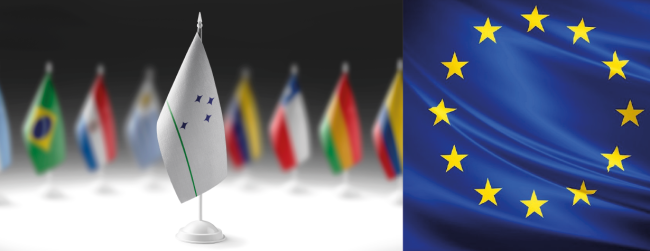
Between „Strategic Autonomy” and „Zeitenwende”: The Importance of Trade Between The EU and Mercosur
This policy paper analyses the geopolitical and economic significance of the EU-Mercosur agreement for the European Union (EU) in the context of the EU’s new European Economic Security Strategy.
India’s Quest for Economic Emancipation from China
In October 2024, the meeting between Chinese President Xi Jinping and Indian Prime Minister Narendra Modi initiated a thaw in relations between the two Asian powers. Has India's high level of economic dependence on China played an important role in bringing about this diplomatic shift?
The Indo-Pacific and Trump II. In Uncle Sam’s brutal embrace
In this collective analysis, the research team of the Center for Asian Studies presents a synthetic and non-exhaustive assessment of the relations taking shape between the United States under the Trump II administration and some of the main players in the Indo-Pacific.
AI and Technical Standardization in China and the EU: Diverging priorities and the need for common ground
Given the highly disruptive potential of AI, global cooperation on AI safety and governance is imperative, and yet the deeply transformational potential of AI also ensures that a high level of competition and systemic rivalry is likely unavoidable. How can the EU best manage its complex relationship with China in the field of AI so as to ensure a necessary level of cooperation in spite of competition and rivalry?
China’s Quest for a Quantum Leap
The global race to harness quantum science is intensifying. Recognizing the strategic potential of quantum technology for economic, military, and scientific advancement, China is focusing on quantum breakthroughs as a way to shift the balance of power, especially in its competition with the United States. President Xi Jinping has emphasized the importance of scientific innovation, particularly in quantum fields, to fuel national development and ensure security.
China, technical standardization, and the future of globalization
As the global economy sits at a crossroad between connectivity-driven globalization and strategic decoupling, technical standardization provides a valuable measure of where we are headed.
Japan: Deciphering Prime Minister Ishiba’s Strategic Vision. Toward an Asian version of NATO?
On Tuesday, October 1, Shigeru Ishiba was sworn in as Prime Minister of Japan. His proposal to revise the security alliance with the United States and create an Asian version of the North Atlantic Treaty Organization (NATO) attracted attention and sparked lively debate.
Critical Raw Materials, Economic Statecraft and Europe's Dependence on China
As China tightens export controls on critical minerals, it is important to put Beijing's policies in perspective and analyse how Europe can respond.
China’s Mature Node Overcapacity: Unfounded Fears
China is decoupling from, not flooding, the global mature-node semiconductor market. As China increasingly pursues industrial policies encouraging domestic chip production, its own growing chip demand will prevent a direct flood of cheap Chinese chips on foreign shores. However, as Beijing achieves its goal of decreasing the reliance of domestic downstream manufacturers on foreign chips, European and American mature-node semiconductor companies will feel the ripple effects of an increasingly “involuted” Chinese chip ecosystem.
Getting China Onboard a Global Debt Governance System
China has become the number one provider of development finance in the world. Because of its significant share in Low and Middle Income Countries’ (LMICs) external debt, China should take up responsibilities and cooperate with traditional development finance providers, but its particular lending style and distinct approach to debt management pose many challenges and do not make international cooperation straightforward.
Between „Strategic Autonomy” and „Zeitenwende”: The Importance of Trade Between The EU and Mercosur
This policy paper analyses the geopolitical and economic significance of the EU-Mercosur agreement for the European Union (EU) in the context of the EU’s new European Economic Security Strategy.

Deployment of the French Frigate Bretagne in the Indo-Pacific: Implementing French Strategy in the Region
The deployment of the French Navy’s multi-mission frigate (FREMM) Bretagne in the Indo-Pacific in recent months demonstrates France’s capability to project power far from the mainland and solidifies its Indo-Pacific strategy.
National Perspectives on Europe's De-risking from China
The concept of “de-risking” has become a significant focus for the European Union (EU) in managing its relations with China since first proposed by European Commission President Ursula von der Leyen in March 2023. However, the interpretation and policy responses to de-risking vary across Europe, reflecting diverse national perspectives.

France Adapts to an Era of Strategic Competition With China

Critical Raw Materials: What Chinese Dependencies, What European Strengths?
In adapting to growing geopolitical competition over digital technology, the EU and the UK are striving for economic security and technological sovereignty. European policies focus on reducing critical over-dependencies on China. This de-risking is a necessary process of adaptation to the new geopolitical realities.
Macron’s China Policy: Dropping Illusions and Bringing Back Realpolitik
One may regret that France has not upgraded its China policy sooner, but it seems that the French president is now clear-eyed that it is not enough to only have a good relationship with Beijing, it is also necessary to reinstate the balance of power.
Fumio Kishida's Visit to Paris. The France-Japan Relation Deserves Better
Chinese President Xi Jinping's state visit to France hit the headlines. President Macron rolled out the red carpet to welcome his guest, hoping to convince China to limit its support for Russia and respect fair trade rules.
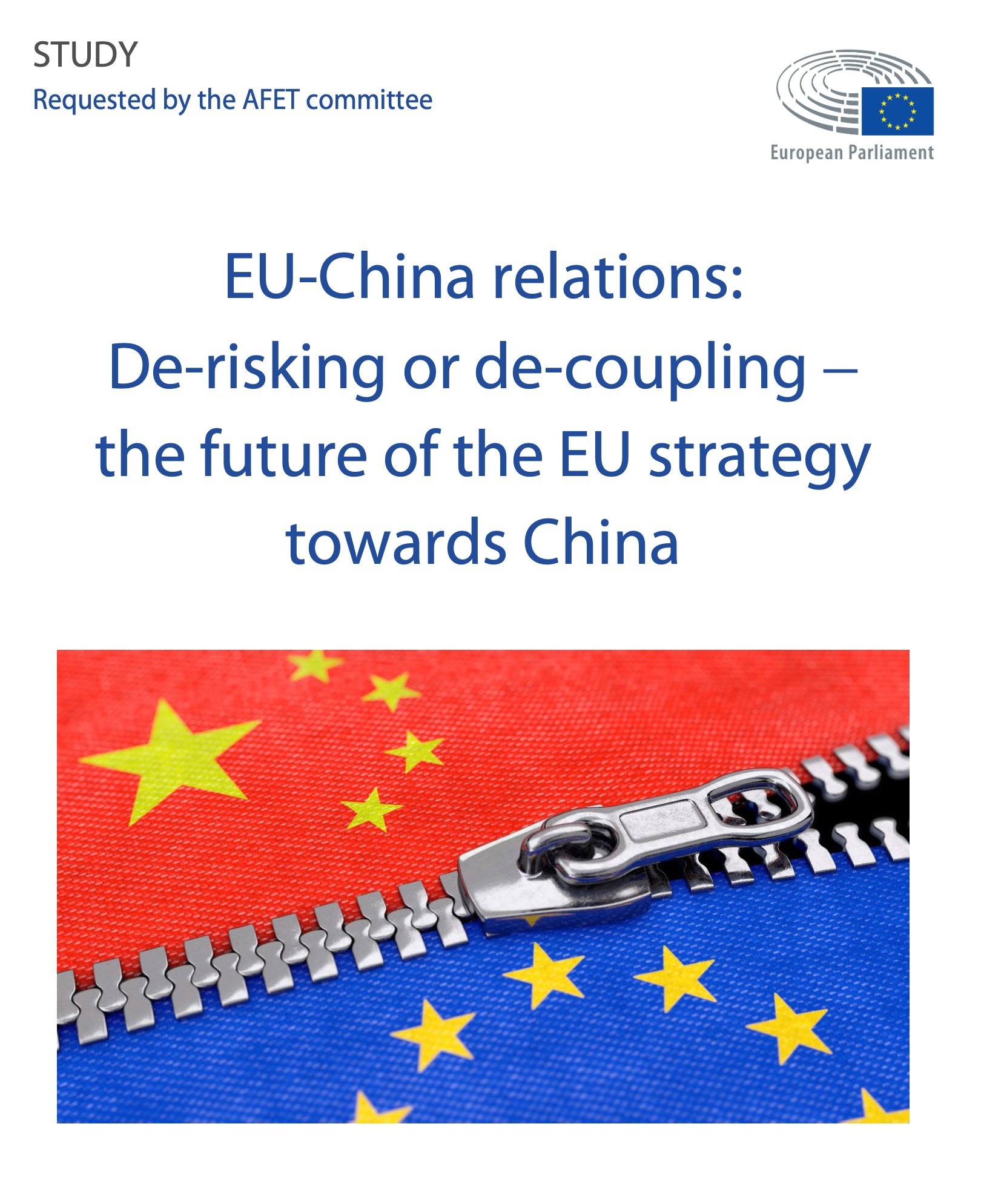
EU-China relations: De-risking or de-coupling − the future of the EU strategy towards China
As the European Union (EU) prepares for a new round of parliamentary elections, how should the bloc consider its strategy towards China?
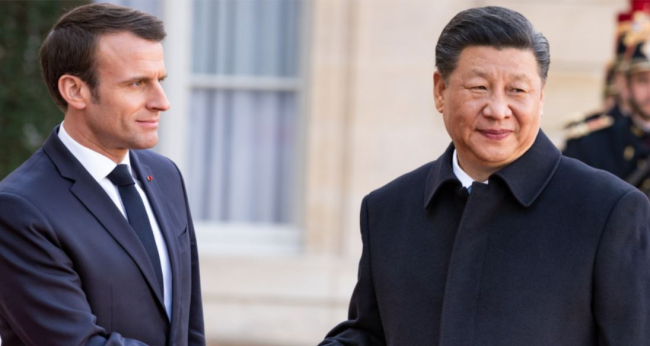
Xi Jinping’s Visit to France: Stumbling Blocks Pile Up on the Path of Bilateral Cooperation
On May 6 and 7, Chinese President Xi Jinping will pay a state visit to France, his first to Europe since 2019 and the Covid-19 pandemic. Emmanuel Macron and Xi Jinping will celebrate Franco-Chinese friendship and the sixtieth anniversary of the establishment of diplomatic relations between their two countries. It comes at a time when the bilateral relationship is officially perceived as positive on both sides, especially after the French President’s visit to China in April 2023.
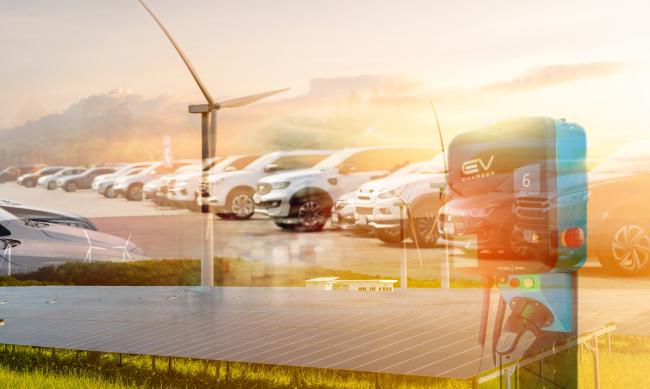
Electric Vehicles: A Strong and Still Understated Performance
Electric vehicles (EVs) are better for the climate – even in worst-case scenarios. Across its life cycle, a typical European electric car produces less greenhouse gas (GHG) and air pollutants or noise than its petrol or diesel equivalent. Emissions are usually higher in the production phase, but these are more than offset over time by lower emissions in the use phase. According to the European Environment Agency’s report on electric vehicles, life cycle GHG emissions of EVs are about 17-30% lower than those of petrol and diesel cars.
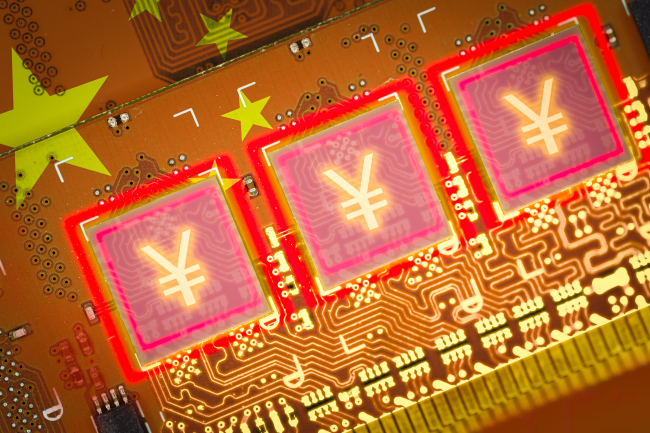
Why Chinese Fintechs Have Failed to Reshuffle International Finance
New Chinese financial technologies, including unparalleled electronic payment systems, have so far failed to threaten U.S. financial dominance.
Macron's Taiwan comments expose muddled China policy
French President Emmanuel Macron's call for Europe to steer clear of a Taiwan conflict -- rooted in France's pride and deep-seated resistance to following America's lead -- has raised questions about where he and Paris really stand on China.

France's Macron is sending China the wrong signals
More realistic posture would strengthen Paris' role in Indo-Pacific region

Does Macron's stance on Taiwan weaken G7 deterrence against China?
One of Prime Minister Fumio Kishida’s top goals for next month’s Group of Seven summit in Hiroshima is to create a united front on issues like China and Ukraine. But finding a unified approach to dealing with Beijing’s assertiveness might have just become harder.

France’s Macron Renews Call for a Sovereign Europe Less Reliant on Foreign Powers
French president’s remarks follow criticism over his warning that Europe should steer clear of U.S.-China tensions over Taiwan

Europe is ‘counting on China’ to end Russia’s war in Ukraine, leaders tell Xi Jinping in Beijing
European Commission chief Ursula von der Leyen and French President Emmanuel Macron deliver united message to Chinese president during visit ; but as French leader signed over 20 business deals on China trip, EU chief took sterner line with Xi on economic grievances, human rights and Taiwan
In China, Macron appeals to Xi to help end Ukraine conflict
French President Emmanuel Macron called on Chinese President Xi Jinping to help convince Russia to hold negotiations toward ending the war in Ukraine as the two leaders met in Beijing on Thursday.

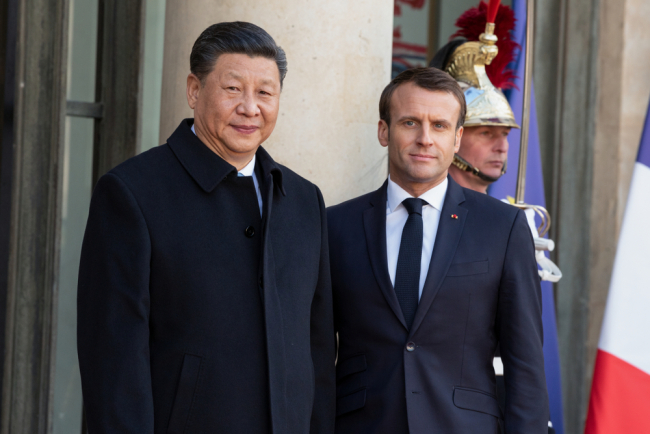
France’s Emmanuel Macron to Press Xi Jinping on China’s Support of Russia
French President Emmanuel Macron is expected to press Chinese leader Xi Jinping during a trip to China this week to limit support for Russia in its war against Ukraine, according to French officials, amid growing Western concerns over Beijing’s deepening economic and political ties with Moscow.
Xi's Moscow Visit Risks Further Emboldening Putin: Analysts
There is no sign the visit of Chinese President Xi Jinping to Moscow will rein in President Vladimir Putin in his war in Ukraine, even if it again highlights a lopsided relationship where Russia is clearly the junior partner, analysts say.
Are US military drills in Asia-Pacific a veiled attempt to curb Chinese power?
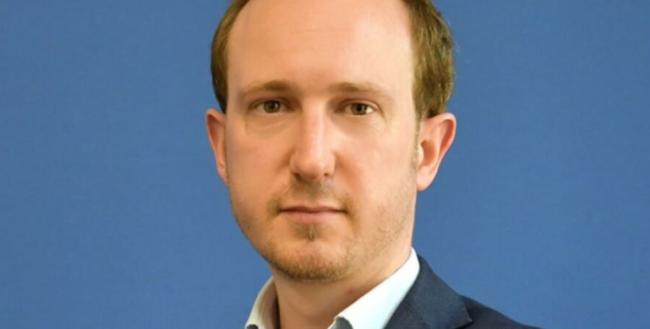
Recent US military activity in the Asia-Pacific is on the rise, including drills in the Philippines and South Korea as well as a submarine deal struck between the US and Australia. China has, meanwhile, accused the US of encircling the country. FRANCE 24 speaks with an expert to shed light on the mounting tensions.

Semiconductors: how the United States is suffocating China
The United States are ramping up its efforts to deny China access to the most advanced semiconductors powering smartphones, personal computers and the latest generation of supercomputers.
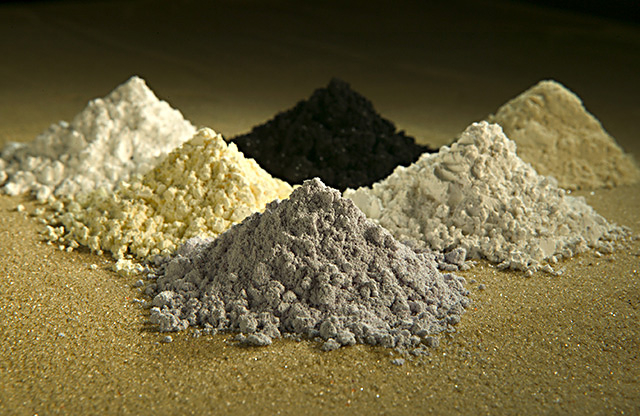
Europe’s big rare earth discovery seen as ‘game changer’ in bid to address China’s dominance
Europe has been almost entirely dependent on China for critical minerals for years, but a newly unearthed million-tonne deposit in Sweden could help reduce that reliance
Japan’s Africa aid rivals China in terms of ‘quality over quantity’: analysts
Japan has been investing in the continent for longer than China and applies international standards to its infrastructure financing, analysts said. Its pockets may not be as deep, but its support of good governance and democratic principles makes it a tempting development partner for African states.
After support for Ukraine, Kishida aims for NATO unity on China
When Prime Minister Fumio Kishida becomes the first Japanese leader to attend a NATO leaders summit on Wednesday, he’ll be looking to stress the need for unity in preventing China from taking the “wrong lessons” from the Ukraine war as the bloc looks to expand its footprint in the Indo-Pacific.

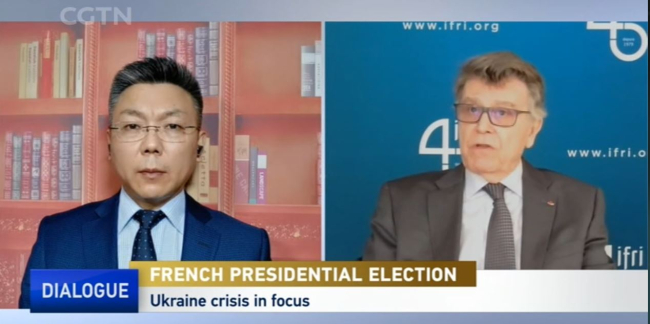
French Presidential Election, Ukraine crisis, China-France and China-EU relations
This week the guest of "Dialogue Weekend" on CGTV is Thierry de Montbrial, founder and executive chairman of Ifri, French Institute for International Relations. Last Sunday, Emmanuel Macron became the first French president to be re-elected since Jacques Chirac 20 years ago, with a 17-point victory over far-right populist Marine Le Pen.

Helium‑3 from the lunar surface for nuclear fusion?
Since 1969, the return of a human mission to the Moon has never seemed so close. Although scientific interest continued to flourish, space programmes had for many decades abandoned it in favour of the International Space Station and missions to explore the solar system.

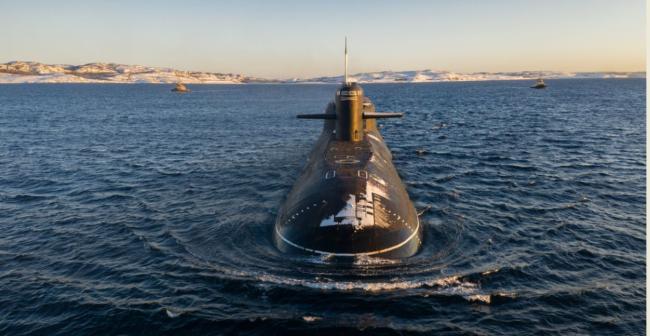
China Bristles as EU Turns Its Attention Toward Indo-Pacific
Recent months have seen the United States and its allies step up their assertiveness toward China, with support voiced for Taiwan, a new deal to provide Australia with nuclear submarines and a new European strategy for increased presence in the Indo-Pacific, according to the Associated Press.

China Space Station First Step in Country's Plans to Colonize Space
China's far-reaching ambition for a permanent presence in outer space began in earnest on Thursday with the launch of its first crew bound for a new space station.

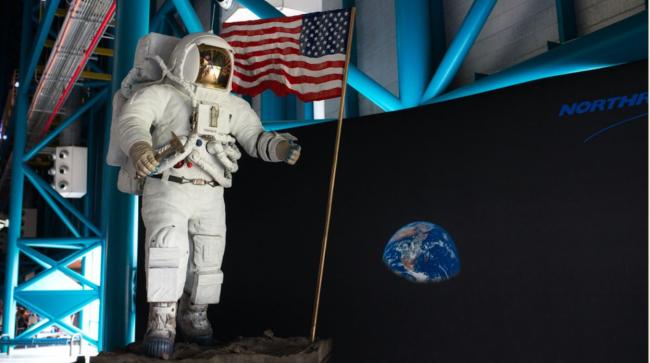
Destination Moon: is it time for us to send astronauts back?
The series For All Mankind (2019) is a fictional alternate history that imagines a world where the Soviet Union was the first power to send an astronaut to the moon. From that starting point, the two rival superpowers compete to establish their own lunar station.

Europe’s relationship with China is now one of mistrust and hostility
At the start of the pandemic, Europe and China helped one other. Then the mood changed.
China wants its diplomats to show more fighting spirit. It may not be intended to win over the rest of the world
The rise of the so-called ‘wolf warriors’ heralds a more aggressive approach to promoting the country’s official line. Analysts warn this is likely to harm the country’s image even if their careers benefit as a result.
Ifri, a foundation recognized as being of public utility, relies largely on private donors – companies and individuals – to guarantee its sustainability and intellectual independence. Through their funding, donors help maintain the Institute's position among the world's leading think tanks. By benefiting from an internationally recognized network and expertise, donors refine their understanding of geopolitical risk and its consequences on global politics and the economy. In 2026, Ifri partners with over 90 French and international companies and organizations.